
Do I Need a Passport for Puerto Rico?
process term
No. If you are a U.S. citizen flying from the mainland United States to Puerto Rico, you do not need a passport. Puerto Rico is a U.S. territory, and travel between the mainland and Puerto Rico is treated as domestic travel for U.S. citizens.[1]
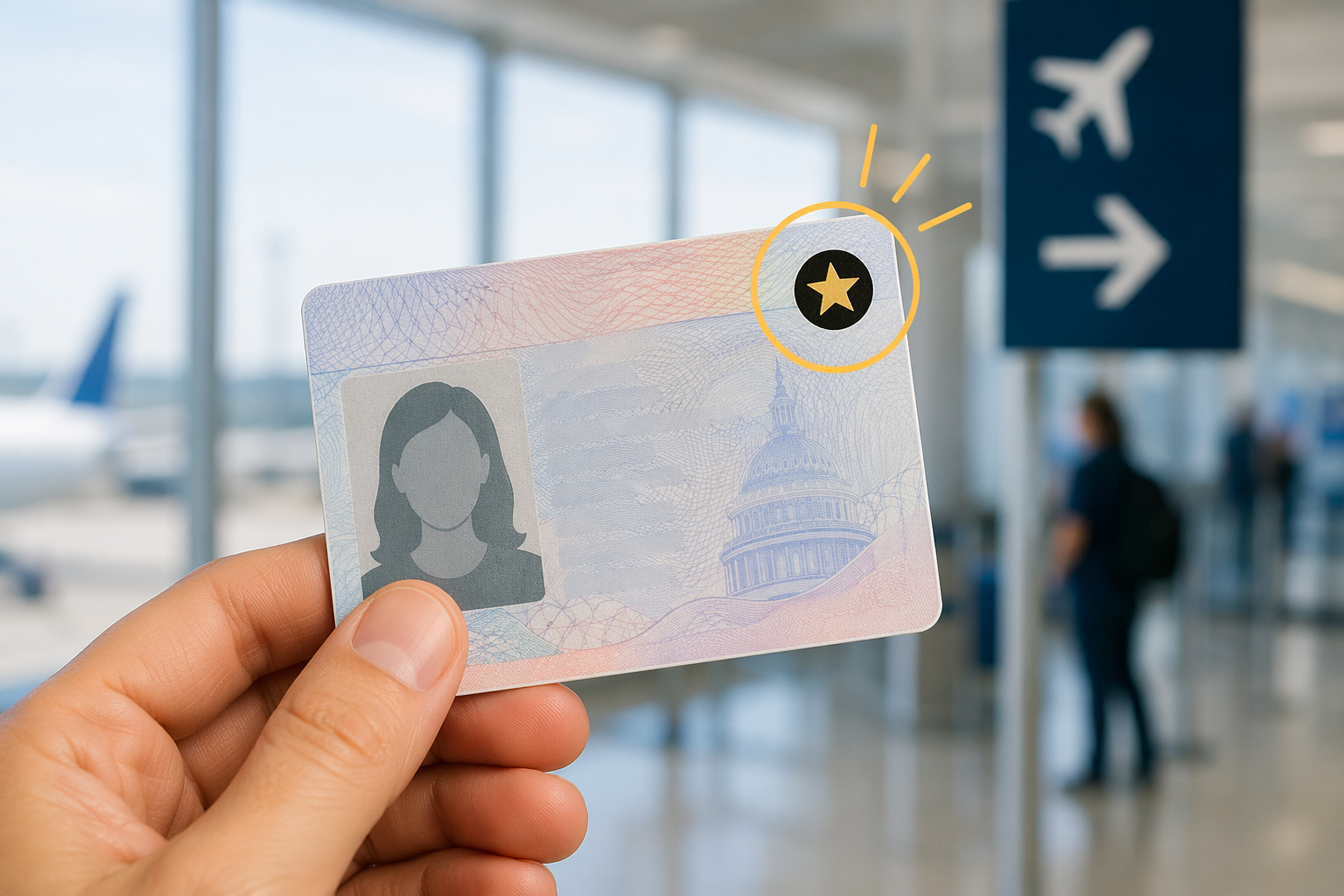
That answer is only half of what matters at the airport. In 2026, if you are 18 or older, you still need acceptable identification at the TSA checkpoint: a REAL ID-compliant driver's license or state ID, or another ID that TSA accepts. REAL ID enforcement began on May 7, 2025, and TSA describes compliant cards as generally marked with a star.[2]

The Document You Bring Instead of a Passport
For most U.S. citizens, the cleanest airport setup is simple: bring a REAL ID-compliant driver's license or state identification card. If your license has the required REAL ID marking, you can use it for the flight to Puerto Rico the same way you would for a domestic flight to Florida, Texas, or New York.
If your license is not REAL ID-compliant, that does not automatically mean you need to cancel the trip or rush a passport application. TSA accepts several other forms of identification at the checkpoint, including a U.S. passport book, U.S. passport card, DHS trusted traveler cards such as Global Entry, NEXUS, SENTRI, and FAST, U.S. military ID, permanent resident card, border crossing card, federally recognized tribal-issued photo ID, HSPD-12 PIV card, foreign government-issued passport, Canadian provincial driver's license or Indian and Northern Affairs Canada card, Transportation Worker Identification Credential, U.S. Merchant Mariner Credential, Veteran Health Identification Card, and state-issued enhanced driver's licenses.[3]
| If you have... | Can it work for a Puerto Rico flight? |
|---|---|
| REAL ID-compliant driver's license or state ID | Yes. This is the usual document for adult domestic air travel in 2026.[2] |
| U.S. passport book | Yes. It is accepted by TSA, though U.S. citizens do not need it because Puerto Rico is domestic travel.[1][3] |
| U.S. passport card | Yes. TSA lists it as acceptable identification at the checkpoint.[3] |
| Global Entry, NEXUS, SENTRI, or FAST card | Yes. TSA lists DHS trusted traveler cards as acceptable ID.[3] |
| Permanent Resident Card | Yes. TSA accepts it, and CBP says lawful permanent residents may use their green card for travel within the United States.[3][6] |
| Standard non-REAL ID driver's license | Do not count on it for airport screening after REAL ID enforcement. Bring another TSA-accepted ID.[2][3] |
One detail helps some travelers more than they expect: TSA says it may accept the listed forms of identification up to two years after expiration. That is not a reason to ignore renewal, but it does mean a recently expired passport or other listed ID may still solve the checkpoint problem.[3]
Why Puerto Rico Is Domestic Travel for U.S. Citizens
The passport answer comes from Puerto Rico's status, not from a special airline exception. USA.gov identifies Puerto Rico as a U.S. territory and states that U.S. citizens do not need a passport to travel directly between the United States and U.S. territories.[1]
That is why a nonstop or ordinary domestic itinerary from the mainland to San Juan is not handled like an international arrival. You are still going through TSA screening before departure, and that screening is where the REAL ID or alternative-ID rule matters.
Adults: Check the ID Before You Check the Weather
The practical check is fast. Look at your driver's license or state ID. If it is REAL ID-compliant, it will generally have a star marking. TSA points travelers to state-issued REAL ID cards or another acceptable identification document for airport screening after the May 7, 2025 enforcement date.[2]
- If your license has the REAL ID star, bring it.
- If your license does not have the star, bring a passport book, passport card, trusted traveler card, military ID, permanent resident card, enhanced driver's license, or another TSA-listed ID.
- If your only ID is expired, check whether it is one of TSA's listed IDs and whether it is within TSA's stated two-year expiration window.[3]
- If you have no acceptable ID at all, do not treat that as normal planning; look at TSA's ConfirmID fallback before you go to the airport.
ConfirmID Is a Backup, Not the Plan
TSA ConfirmID is the new piece that can make 2026 advice confusing. It is not a new passport rule, and it is not a replacement for carrying ID. TSA describes ConfirmID as an option for travelers who arrive without acceptable identification; it launched on February 1, 2026, costs $45, and TSA says the average verification time is 10 to 15 minutes.[4]
The important word is fallback. If you can bring a REAL ID license, passport card, trusted traveler card, or another accepted document, do that. ConfirmID is for the bad morning: the wallet left at home, the ID missing from the bag, the traveler already at the airport with no acceptable document. TSA says travelers pay online before travel, so this is not something to discover casually while standing in the security line.[4]
Children Flying to Puerto Rico
Children under 18 do not need identification for domestic flights, including flights to Puerto Rico, according to the FAA's answer on minors and identification.[5]
That does not mean every airline interaction is document-free. Airlines may have their own procedures for unaccompanied minors, age verification, or family boarding situations. The TSA checkpoint rule is the narrow one: minors under 18 are not required to present ID for domestic air travel.[5]
Green Card Holders and Other Non-U.S. Citizens
Lawful permanent residents do not need a passport just because they are flying from the mainland to Puerto Rico. CBP says lawful permanent residents traveling within the United States should carry their Permanent Resident Card, and TSA lists the permanent resident card as an acceptable ID at the checkpoint.[3][6]
Non-U.S. citizens who are entering the United States from abroad are in a different category. Puerto Rico is part of the U.S. travel system for entry purposes, so international visitors generally need the same kind of authorization they would need to enter the mainland United States: a valid passport plus either ESTA under the Visa Waiver Program, when eligible, or the appropriate visa. Discover Puerto Rico's travel FAQs and Kiwi.com's Puerto Rico guide both frame non-U.S. visitor requirements this way.[7][8]
Nationality-specific visa rules can change the answer quickly. If you are not a U.S. citizen or lawful permanent resident, verify the rule that applies to your passport, status, and route before you buy the ticket or cruise.
Cruises Are Their Own Document Problem
A flight from the mainland to Puerto Rico is the simple case. Cruises are not always simple, even when they start and end at U.S. ports. Some closed-loop cruise situations may allow U.S. citizens to travel with a birth certificate plus government-issued photo ID instead of a passport, but that is not a promise that every itinerary or every cruise line will accept those documents.
If you are cruising to or from Puerto Rico, use the cruise line's document page for your exact sailing. A port stop in another country, an open-jaw itinerary, or a stricter carrier policy can move you out of the simple domestic-flight answer.
When a Passport May Still Be the Right Document
For a U.S. citizen on a direct mainland-to-Puerto Rico flight, a passport is optional, not required. It can still be useful if it is the easiest TSA-accepted ID you own, especially if your driver's license is not REAL ID-compliant. In that situation, the passport is doing checkpoint work, not border-crossing work.
A passport may become required if your trip is not really just mainland United States to Puerto Rico. An international layover, a separate side trip to another country, or a cruise itinerary that crosses into foreign ports can add document requirements that the domestic Puerto Rico rule does not cover.
Do not rely on rumors about a separate Puerto Rico passport. The document question is much plainer than that: U.S. citizens do not need a passport for direct domestic travel to Puerto Rico, but adults do need acceptable TSA identification to board the flight.
The Pre-Airport Answer
If you are a U.S. citizen flying from the mainland to Puerto Rico, the answer to "do I need a passport for Puerto Rico" is no. The trip is domestic because Puerto Rico is a U.S. territory.[1]
Before you leave for the airport, answer the more useful question: what ID will you show TSA? If you are 18 or older, bring a REAL ID-compliant license or another TSA-accepted identification document. If you are not a U.S. citizen, are traveling by cruise, or have an international connection, verify the separate rule for that route instead of borrowing the domestic-flight answer.
References
- Do you need a passport to travel to or from U.S. territories — USA.gov
- REAL ID — TSA.gov
- Acceptable Identification at the TSA Checkpoint — TSA.gov
- About TSA ConfirmID — TSA.gov
- Do minors need identification to travel? — FAA.gov
- Documents needed for Lawful Permanent Residents (LPR) traveling within the US — CBP
- Frequently Asked Questions — DiscoverPuertoRico.com
- Do you need a passport to go to Puerto Rico? — Kiwi.com