
What You Need to Know About the TSA 3-1-1 Rule in 2026
Find out what the TSA 3-1-1 rule requires for liquids in your carry-on, including the 3.4-ounce limit, the quart-sized bag rule, which items are exempt, and whether the rule has changed in 2026.
TSA · Applies to: Both
Rule last reviewed:
The TSA 3-1-1 rule is still in effect in 2026. For carry-on bags, each liquid, aerosol, gel, cream, or paste container must be 3.4 ounces, or 100 milliliters, or smaller; all of those containers must fit in one clear quart-sized resealable bag; and each passenger gets one such bag.[1]
The part that has changed at some airports is the lane experience, not the packing rule. At checkpoints using newer CT scanners, travelers may be told to leave their liquids bag inside the carry-on. That does not mean a 6-ounce sunscreen, a large shampoo bottle, or a jar of peanut butter has become acceptable in a carry-on. It means the scanner can handle the bag differently.
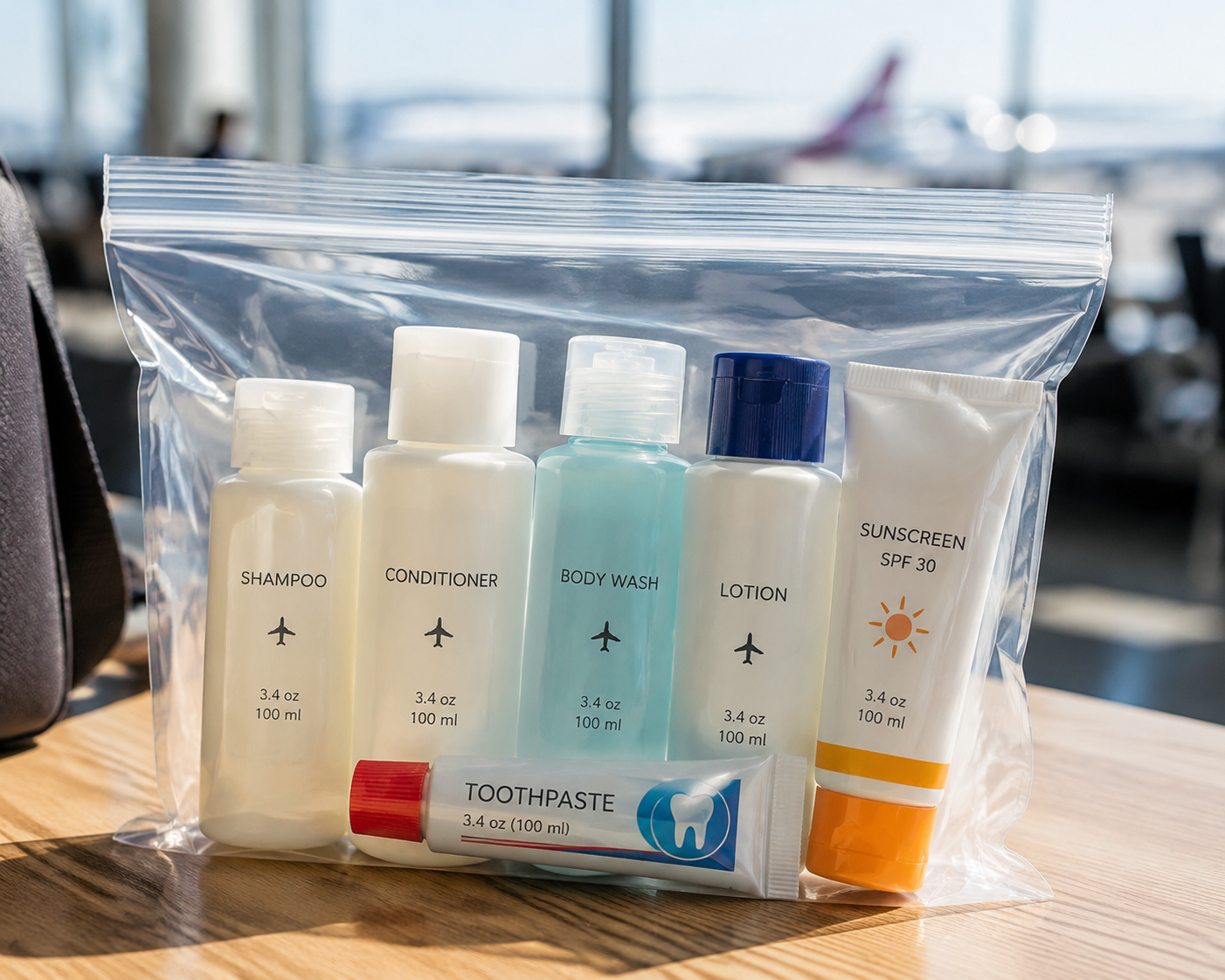
The Three Numbers Still Matter
The rule is easy to recite and surprisingly easy to pack wrong. TSA’s formula is container size, bag size, and passenger count: 3.4 ounces per container, one quart-sized bag, one bag per passenger.[1] The quart bag is not decorative. If the bottles, tubes, and jars cannot fit inside it and close, the bag is overpacked.
| Part of 3-1-1 | What It Means at Packing Time |
|---|---|
| 3 | Each liquid, aerosol, gel, cream, or paste container must be 3.4 oz / 100 ml or smaller. |
| 1 | All compliant containers must fit in one clear quart-sized resealable bag. |
| 1 | Each passenger may bring one liquids bag through the checkpoint. |
The most expensive mistake is thinking TSA cares how much is left in the bottle. It does not work that way. TSA says the container itself must be 3.4 ounces or smaller, regardless of the amount of liquid remaining inside.[2] A nearly empty 6-ounce sunscreen bottle can still fail because the label says 6 ounces. A 3.4-ounce bottle filled to the top is easier to defend than a larger bottle with a tablespoon left in it.
This is where late-night packing gets people. The half-used family toothpaste looks harmless. The almost-empty hair gel feels wasteful to throw out. The “just a little left” moisturizer seems too small to matter. At the checkpoint, the size printed on the container is the cleanest rule for an officer to apply, and it is the rule travelers should pack for.
CT Scanners Can Change the Bin Routine, Not the Allowance
Newer CT scanners are the source of much of the 2026 confusion. Travel + Leisure reported in July 2026 that CT scanner-equipped checkpoints were in use at more than 255 U.S. airports, and that TSA’s full deployment projection was around 2042.[3] Those machines can produce a more detailed image of a bag, which is why some lanes no longer require passengers to remove their liquids bag.
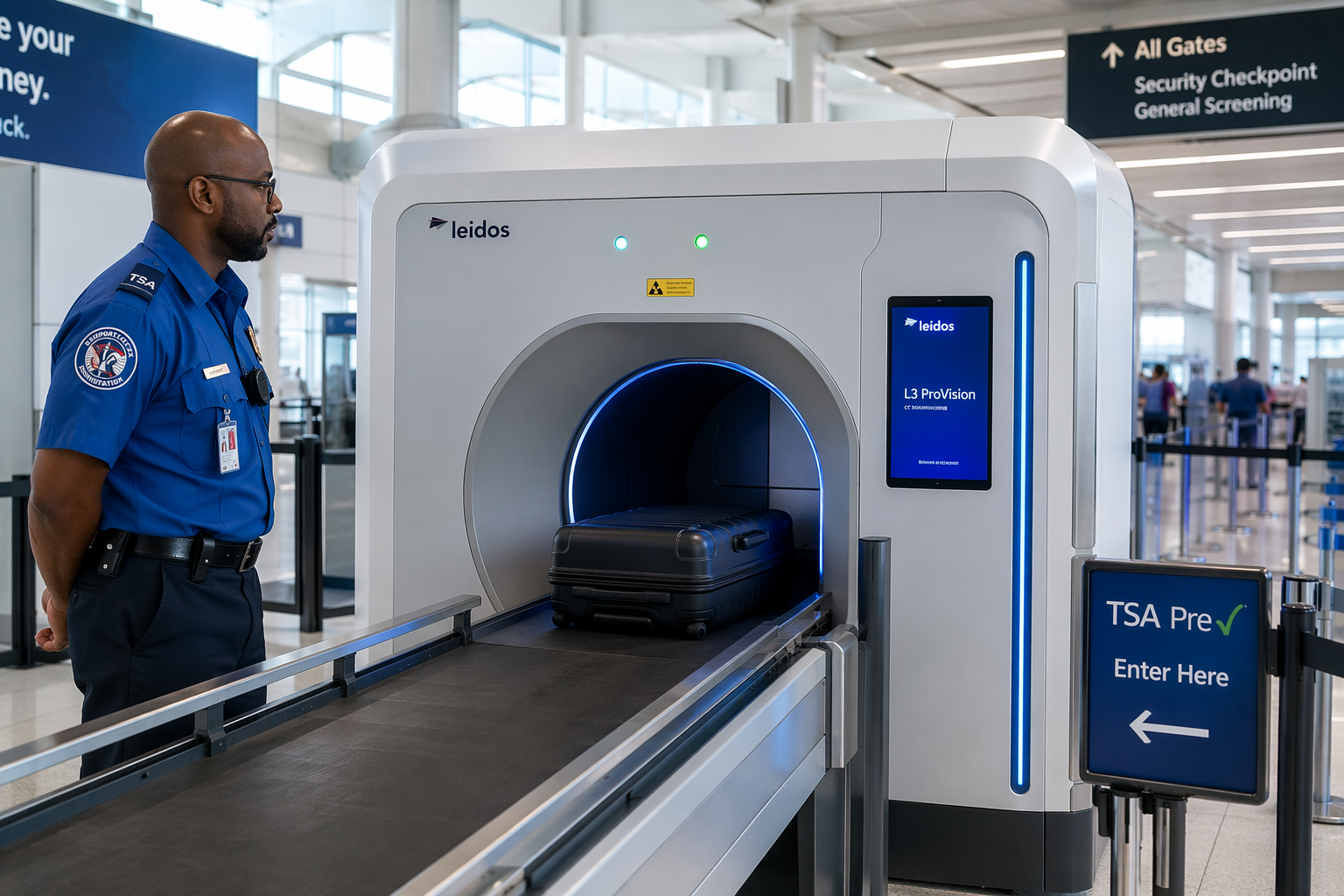
That convenience is lane-specific. An airport may have both CT lanes and traditional X-ray lanes operating at the same time. One traveler may be told to leave everything in the bag; another, a few lines over, may be told to take liquids out. The safest assumption is simple: pack every carry-on as if the 3-1-1 rule will be enforced, then follow the signs and officer instructions at the lane you actually enter.
The shoe-removal change has made this distinction more important. In July 2025, TSA ended routine shoe removal for many travelers, which understandably made people wonder whether other old checkpoint rules were also being retired.[5] DHS Secretary Kristi Noem has publicly discussed reviewing the liquids rule, but that is not the same as a formal rule change travelers can pack around.[5]
What Counts as a Liquid Is Broader Than the Word Sounds
For TSA purposes, the liquids rule covers liquids, aerosols, gels, creams, and pastes.[1] That pulls in the obvious items, such as shampoo, conditioner, lotion, perfume, shaving cream, toothpaste, and sunscreen. It also pulls in items that travelers tend to think of as food or makeup rather than “liquids.”
- Peanut butter, hummus, yogurt, and similar spreadable or creamy foods should be treated as 3-1-1 items in a carry-on.[2]
- Mascara, liquid eyeliner, gel cosmetics, cream blush, and similar products belong in the quart bag if they are not solid.
- Bar soap, stick deodorant, powder foundation, and solid lipstick are not packed under the liquids rule.
A practical test is whether the item can spill, smear, spread, spray, pump, squeeze, or pour. That is not a legal definition, and TSA officers have the final say at the checkpoint, but it helps catch the things most people forget: snack cups, cosmetic tubes, little jars, and anything sold as a “balm” or “gel.”
Exceptions Are Real, but They Have Conditions
The rule has important exceptions, and they are not loopholes. They exist because some passengers genuinely need items that do not fit inside a quart bag. The calmer way through the checkpoint is to separate those items from the regular toiletries and tell the officer before screening begins.
Liquid Medications
TSA allows medically necessary liquids, gels, and aerosols in reasonable quantities for a flight, even when they exceed 3.4 ounces.[4] They do not have to fit inside the quart-sized liquids bag, but they should be declared to an officer at the checkpoint for inspection.[4]
TSA says medication does not need to be in prescription bottles under federal screening rules, though states may have their own rules about prescription medication labeling.[4] Original packaging is still a sensible choice when available, not because it magically avoids screening, but because it makes the item easier to identify when everyone is tired and the line is moving.
Baby Formula, Breast Milk, and Toddler Drinks
Baby formula and breast milk are exempt from the 3.4-ounce limit, and TSA says they are allowed in reasonable quantities in carry-on bags.[2] The child does not need to be traveling with the passenger for these items to be screened.[2] That matters for pumping parents, caregivers, and anyone transporting milk without a baby in the same security line.
Do not bury these items under shoes and chargers. Keep them accessible, declare them, and expect separate screening. Ice packs or freezer packs used to keep medically necessary or infant-feeding items cold may be inspected too.
Frozen Items
Frozen liquid items can pass the checkpoint if they are completely frozen solid when presented for screening.[2] If a frozen water bottle, gel pack, or other frozen item is partially melted, slushy, or has liquid at the bottom, it must meet the 3-1-1 rule unless it qualifies under a separate exemption.[2]
This is not the place to gamble with a long airport commute. If the item only works under the rule while fully frozen, the timing has to work all the way to the checkpoint, not just from the freezer to the car.
Duty-Free Liquids
Duty-free liquids over 3.4 ounces can be allowed in a carry-on only under narrow conditions: they must be packed in a secure, tamper-evident bag, the passenger must have a receipt showing the purchase was made within the previous 48 hours, and the items must be able to clear screening.[1]
The risky moment is often a connection. A bottle bought after an international security checkpoint may still need to pass another screening point later. If the sealed bag is opened, the receipt is missing, or the item cannot be screened, the “duty-free” label will not rescue it.
Hand Sanitizer
Hand sanitizer deserves a current check before packing anything larger than 3.4 ounces. Some 2026 secondary travel summaries still describe a larger pandemic-era allowance, while others say it has ended. Because this has been reported inconsistently, the practical answer is to verify TSA’s current sanitizer guidance before relying on an oversized bottle. If you do not check, pack sanitizer under the standard 3-1-1 limit.
Why the Rule Exists
The modern liquids rule traces back to the 2006 transatlantic aircraft plot, in which conspirators planned to use liquid explosives on flights from the United Kingdom to North America.[6] In August 2006, authorities initially responded with severe restrictions on liquids in carry-ons; the rule was later relaxed into the small-container system travelers now know.[6]
That history explains why the rule is stubborn in a way that feels odd at the packing counter. TSA is not trying to decide whether your face wash is dangerous by itself. It is enforcing a standardized limit that makes screening manageable across millions of ordinary bottles, tubes, and jars.
A Carry-On Packing Check That Actually Prevents Problems
- Read the container label, not the remaining amount inside. Anything over 3.4 oz / 100 ml goes in checked luggage unless it qualifies for an exemption.
- Put all regular liquids, gels, creams, aerosols, and pastes into one clear quart-sized resealable bag.
- Move peanut butter, hummus, yogurt, mascara, gel cosmetics, and similar borderline items into the liquids bag or check them.
- Keep medications, baby formula, breast milk, and other exempt liquids separate and ready to declare.
- Treat CT scanners as a convenience at the lane, not permission to pack larger toiletries.
International travel adds another layer, but it does not change what happens at a U.S. TSA checkpoint. Rules at European and U.K. airports have shifted as some airports tested or adopted newer scanners and then faced changing restrictions again. For a trip that starts, ends, or connects through the United States, pack the carry-on for TSA’s 3-1-1 rule first, then check the airport rules for any non-U.S. departure points.
For 2026, the clean answer is still the least dramatic one: pack every U.S. carry-on by 3-1-1, follow the instructions posted at the checkpoint, and do not confuse a smoother CT scanner lane with a relaxed liquids rule.
References
- Liquids, Aerosols, and Gels Rule, TSA
- Liquids, Aerosols, and Gels Rule, TSA
- TSA Liquid Rules: What You Can Bring in Your Carry-On Bag, Travel + Leisure, July 2026
- Medications (Liquid), TSA
- TSA security changes: liquid, shoes, Fox5 DC
- 2006 transatlantic aircraft plot, Wikipedia
Spotted something outdated?
Report a correction if this explainer no longer matches the current rule. Report a correction.