
TSA PreCheck: How It Works, What It Costs, and Who Qualifies in 2026
Learn what TSA PreCheck is, how it speeds up airport security, who is eligible, what it costs in 2026, and how recent updates like Touchless ID and REAL ID enforcement affect the program.
TSA · Applies to: Both
Rule last reviewed:
TSA PreCheck is a U.S. government trusted traveler program that changes what happens in the security lane. When the PreCheck indicator appears on your boarding pass, you usually use a dedicated lane and keep your shoes, belt, and light jacket on; your laptop and compliant 3-1-1 liquids stay in your carry-on. TSA says about 99% of TSA PreCheck passengers wait less than 10 minutes at airport security checkpoints.[1]
That is the practical answer to “what is TSA PreCheck?” It is not a pass to skip security, and it does not guarantee that every airport, airline, or trip will feel effortless. It is a way to make the standard checkpoint less interruptive: fewer items in bins, fewer clothing decisions at the conveyor belt, and a lane designed for travelers who have already completed background screening.
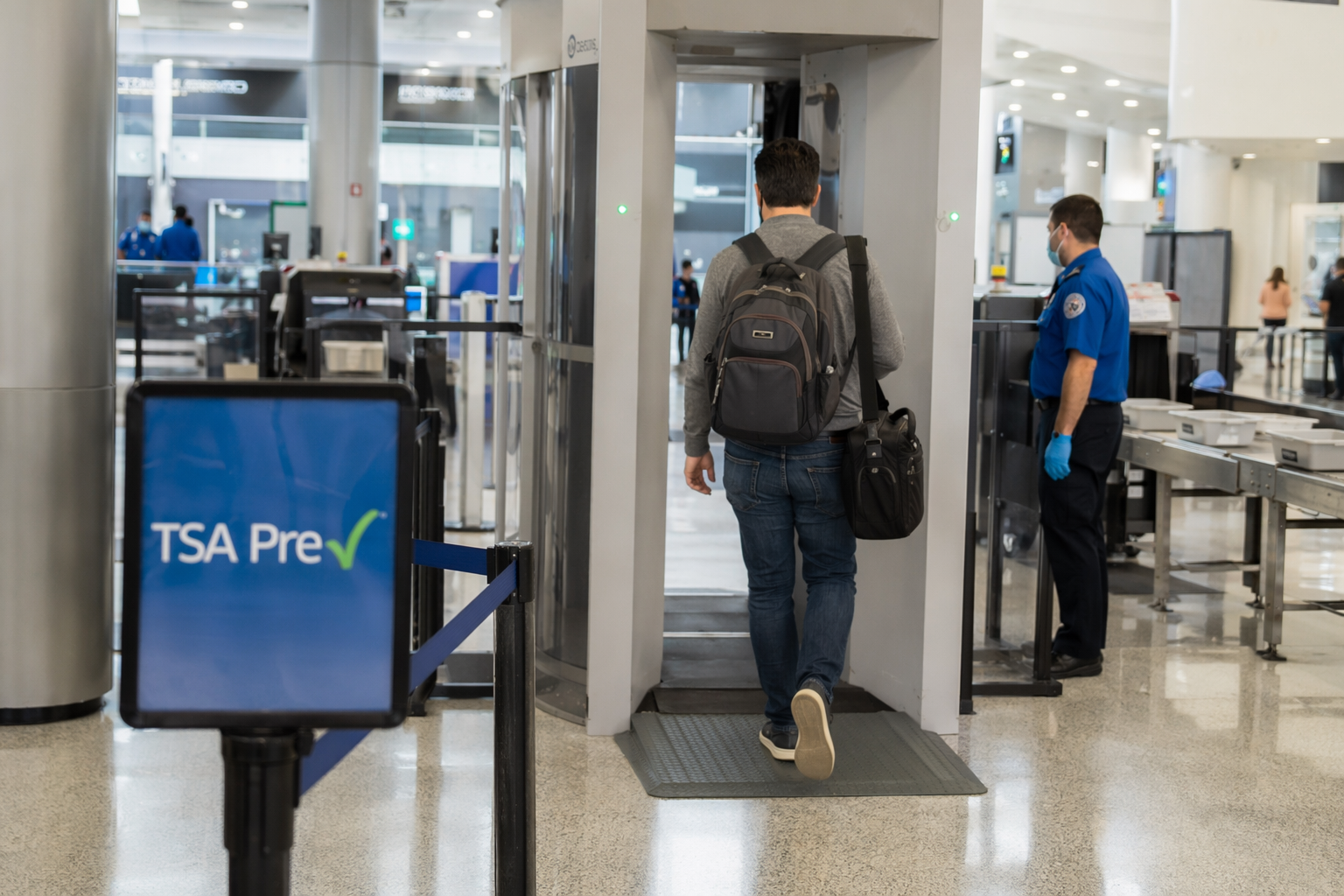
What TSA PreCheck Changes at the Checkpoint
The clearest benefit is not “VIP treatment.” It is that the checkpoint asks less of you at the exact moment when many travelers are juggling IDs, phones, children, shoes, bags, and boarding time.
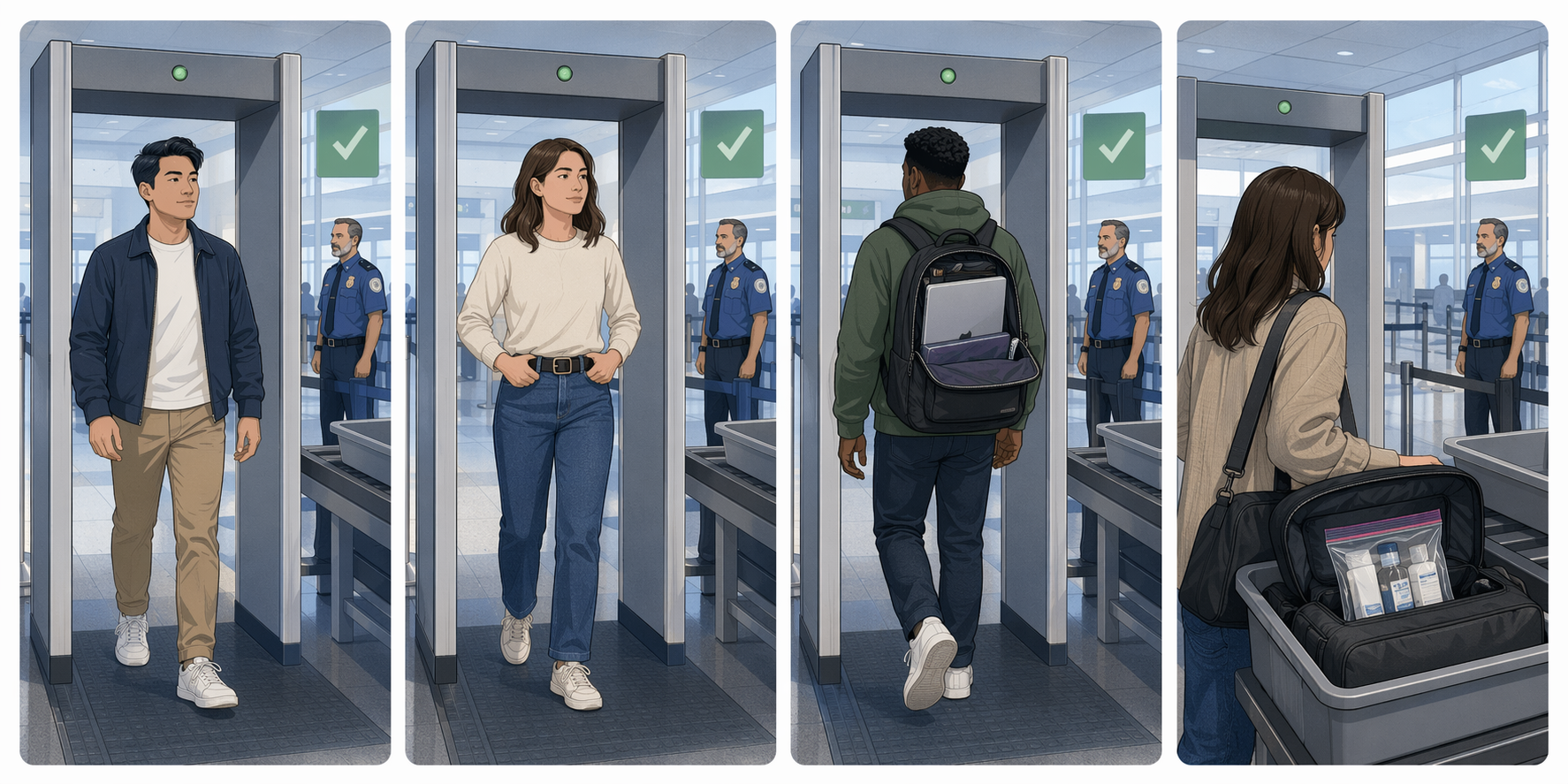
- Shoes usually stay on.
- Belts and light jackets usually stay on.
- Laptops usually stay inside carry-on bags.
- Compliant 3-1-1 liquids usually stay inside carry-on bags.
- You use TSA PreCheck lanes when they are available and when your boarding pass shows the PreCheck indicator.
The word “usually” matters. TSA can still require additional screening, and PreCheck lanes are not open in every terminal at every hour. But when the lane is operating and the boarding pass is correct, the routine is noticeably simpler than the standard screening process.
TSA PreCheck launched in December 2013 and is available at about 200 U.S. airports with more than 100 participating airlines, though the exact airline list changes over time.[2] TSA reported that the program reached 20 million active members in August 2024; that is the most recent official milestone in the provided materials, so the current 2026 total may be higher.[3]
Who Can Get TSA PreCheck
Direct TSA PreCheck enrollment is available to U.S. citizens, U.S. nationals, and lawful permanent residents. TSA also explains that some travelers receive TSA PreCheck eligibility through other trusted traveler or government categories, including Global Entry membership and certain military service categories.[4]
Eligibility is not only about citizenship or immigration status. TSA lists disqualifying criminal offenses and other factors that can prevent approval, including certain permanent and interim disqualifying offenses.[5] If that could apply to you, check the official TSA page before paying an enrollment fee.
Children Traveling With an Enrolled Adult
Families often misread this program in both directions. Children 12 and under may use TSA PreCheck lanes when traveling with an enrolled parent or guardian. Travelers ages 13 through 17 may also receive TSA PreCheck on their boarding pass when traveling on the same reservation as an enrolled adult, but the indicator still needs to appear on the boarding pass.[4]
That last detail is the airport-facing rule. If a teenager’s boarding pass does not show TSA PreCheck, do not assume the lane officer can simply wave them through because the parent is enrolled.
What TSA PreCheck Costs in 2026
TSA PreCheck enrollment is handled through approved enrollment providers, and the price depends on the provider you choose. As of this July 2026 review, TSA lists these new-enrollment prices for a five-year membership:[1]
| Enrollment provider | New enrollment price | Membership length | Renewal range |
|---|---|---|---|
| IDEMIA | $76.75 | 5 years | $58.75-$70 |
| CLEAR | $79.95 | 5 years | $58.75-$70 |
| Telos | $85 | 5 years | $58.75-$70 |
The important decision is less about the small price spread and more about appointment convenience. If one provider has an enrollment center or appointment time that fits your schedule better, that may matter more than saving a few dollars over a five-year period.
There was a recent discount, but it should not be treated as current. TSA announced a limited-time May 2026 promotion that gave travelers ages 30 and under $20 off a new TSA PreCheck membership. That promotion was tied to May 2026 and is no longer active as of July 14, 2026.[6]
How Enrollment Works From Home to Boarding Pass
The application process is short, but it has a few points where small mistakes become airport problems later. The basic flow is:
- Confirm that you are eligible.
- Choose an approved enrollment provider and compare appointment locations.
- Complete online pre-enrollment.
- Attend the in-person appointment with the correct identity and citizenship or immigration documents.
- Wait for your Known Traveler Number.
- Add the Known Traveler Number to airline reservations and frequent flyer profiles.
- Check each boarding pass for the TSA PreCheck indicator before heading to the lane.
The Online Step Is Quick; the Appointment Is the Real Gate
TSA describes the online pre-enrollment step as taking about five minutes. The in-person appointment takes about 10 minutes and includes fingerprinting and document verification. TSA lists more than 1,300 enrollment centers.[1]
For many occasional travelers, the appointment is the bigger obstacle than the fee. If the nearest enrollment center is inconvenient, the practical question is whether you can combine the appointment with an errand, lunch break, airport visit, or upcoming trip. If the appointment keeps getting postponed, the program has no value yet, no matter how good the lane sounds.
Bring the Right Documents
Do not guess on documents. TSA uses a List A / List B document structure for TSA PreCheck applications. Some documents can satisfy the requirement by themselves; other combinations require one document for identity and another for citizenship or immigration status.[7]
Before the appointment, use the official required-documents page for your exact situation. A passport, driver’s license, birth certificate, permanent resident card, or other document may be relevant depending on your status, but the correct combination is what matters. Showing up with almost enough paperwork can mean rescheduling.
Wait for the Known Traveler Number
After approval, TSA issues a Known Traveler Number, usually called a KTN. TSA says most applicants receive a KTN in 3 to 5 days, though some applications can take up to 60 days.[4]
Do not wait until you are standing at the airport to think about the KTN. Add it to your frequent flyer profiles and to any existing reservations where the airline allows updates. For a new booking, enter the KTN during the traveler-information step, not after check-in if you can avoid it.
Make the Name Match
The name tied to your KTN needs to match the name on the airline reservation. TSA’s FAQ warns travelers to make sure the name, date of birth, and KTN are entered correctly so the TSA PreCheck indicator appears on the boarding pass.[4]
This is where ordinary travel habits can cause trouble: using a nickname on one airline profile, a middle initial on another, or a different married or hyphenated name than the one used during enrollment. The lane benefit starts with the boarding pass. If the boarding pass is wrong, the checkpoint officer is not the person who fixes the reservation.
Is TSA PreCheck Worth It?
For frequent flyers, TSA PreCheck is usually easy to justify. The fee covers five years, and the benefit repeats every time the boarding pass shows the indicator and the lane is available. The payoff is not just the shorter line; it is avoiding the full unpack-and-repack sequence over and over.
Moderate travelers are the group that should think most carefully, because the value depends on how often they encounter airport security with real friction. A few round trips a year can be enough if those trips involve busy airports, early departures, family travel, work gear, or tight connections. A traveler who carries a laptop and liquids through a crowded Monday morning checkpoint will feel the difference more than someone who flies once from a quiet airport with only a small personal item.
Very infrequent flyers may still want PreCheck, especially if the appointment is convenient and airport stress is a major concern. But this is where the decision can reasonably go the other way. If you fly once every few years and the nearest appointment is inconvenient, the enrollment process may feel larger than the checkpoint problem it solves.
Parents should look past the membership price alone. Keeping a child’s shoes, snacks, electronics, and small liquids from becoming a full conveyor-belt project can be the real benefit. The children’s rule also means one enrolled adult may cover younger children in many family-travel situations, as long as the boarding passes and reservation rules line up correctly.[4]
What TSA PreCheck Does Not Do
TSA PreCheck does not replace a valid ID, does not guarantee that you will never be selected for extra screening, and does not apply automatically to every reservation just because you paid for membership. You still need the KTN attached to the booking, the airline must participate, the airport must have PreCheck screening available for that flight, and the boarding pass must show the indicator.
It also does not change the underlying carry-on rules. If an item is prohibited, PreCheck does not make it allowed. If a liquid is not compliant with the 3-1-1 rule, the fact that compliant liquids can stay in your bag does not protect the noncompliant item.
PreCheck, Global Entry, CLEAR, Touchless ID, and REAL ID Are Separate Things
Several airport programs now sit near each other in the traveler’s mind, but they do different jobs. TSA PreCheck is about the airport security screening lane. Global Entry is a separate trusted traveler program that includes TSA PreCheck eligibility for eligible members, but its main use is expedited processing when entering the United States from abroad.[4]
CLEAR is not TSA PreCheck. CLEAR is a private identity-verification service at participating airports; TSA PreCheck is the government trusted traveler program that changes the screening lane rules. Some travelers use both, but one does not automatically replace the other.
Touchless ID is another related development, not a replacement for PreCheck. TSA describes TSA PreCheck Touchless ID as an opt-in identity-verification option available at 65 airports with participating partners including American Airlines, Alaska Airlines, and Google Wallet integration.[8] It may change how identity is verified at participating locations, but it does not erase the need to understand whether your boarding pass has TSA PreCheck.
REAL ID is separate as well. Its enforcement now affects domestic-flight identification, while TSA PreCheck affects the screening experience after you are in the airport security process. A REAL ID-compliant license can help satisfy ID requirements for domestic flying; it does not give you PreCheck screening by itself.
A Sensible Way to Decide
Apply for TSA PreCheck if the recurring checkpoint relief is worth a five-year fee and a short in-person appointment. That is most likely true if you fly several times a year, travel with a laptop or family, use busy airports, or simply want fewer moving parts at security.
Skip it, at least for now, if you rarely fly and the appointment would be a chore you keep avoiding. PreCheck is useful only after the enrollment is complete, the KTN is attached, and the boarding pass prints correctly.
Before applying, verify current provider pricing, required documents, and appointment availability on TSA’s official pages. Those details are the ones most likely to change, and they are also the ones that determine whether your first PreCheck trip starts smoothly or with a preventable problem.
References
- TSA PreCheck® — TSA
- TSA PreCheck® Fact Sheet — TSA
- TSA PreCheck® reaches milestone with 20 million members — TSA, August 8, 2024
- TSA PreCheck® FAQ — TSA
- Disqualifying Offenses and Other Factors — TSA
- Travelers aged 30 and under save $20 on new TSA PreCheck® membership — TSA, April 29, 2026
- Required Documents for TSA PreCheck® Application — TSA
- TSA PreCheck® Touchless ID — TSA
Ready to enroll?
Spotted something outdated?
Report a correction if this explainer no longer matches the current rule. Report a correction.