Mel Brooks’s Chinese zodiac animal is the Tiger, specifically the Fire Tiger (丙寅, bǐng yín). Brooks was born in Brooklyn on June 28, 1926, safely inside the Fire Tiger lunar year that began on February 13, 1926 and ended on February 1, 1927.[1][2]
That date range matters. Chinese zodiac years begin at Lunar New Year rather than on January 1, so assigning an animal from the Gregorian year alone can give the wrong answer to anyone born in January or early February. In Brooks’s case there is no ambiguity: his late-June birthday makes him a Fire Tiger.

What the Fire Tiger traditionally means
The Tiger is the third animal in the 12-sign Chinese zodiac cycle. Traditional descriptions associate it with bravery, confidence, charisma, independence and a willingness to take risks. Tigers are also described as direct, competitive and difficult to restrain. Their force can look like leadership when well directed, or like bluntness and stubbornness when it is not.[3][4]
Humor belongs in the profile too. The traditional Tiger is not merely solemn or combative; it can be lively, magnetic and entertaining. That combination is more useful for reading Brooks than a generic portrait of courage. His comedy repeatedly turns aggression into theater, letting provocation arrive through performance rather than as a dry statement of principle.
The Fire element raises the temperature. Within the five-element cycle, Fire is associated with energy, expressiveness, passion, drama, wit and an ability to command attention. Applied to the Tiger, it produces the most visibly performative version of an already forceful sign: less reserved, more theatrical and more inclined to act on conviction.[2][4]
| Zodiac component | Traditional associations |
|---|---|
| Tiger | Courage, confidence, charisma, risk-taking, directness, stubbornness and humor |
| Fire | Expressiveness, passion, drama, wit, energy and showmanship |
| Fire Tiger | A bold, highly visible personality inclined to lead, perform and act decisively |
These are cultural interpretations, not experimentally validated personality measurements. A zodiac reading cannot establish why Brooks developed a particular temperament or predict that someone else born during the same lunar year will resemble him. Its value here is comparative: the symbolism gives names to choices that are already documented across his life and work.
Anger converted into comedy

The closest correspondence begins with the emotional source Brooks has identified for his comedy. He has connected his humor to anger and to the need to defend himself as a small child growing up in Brooklyn. Comedy gave him a way to answer intimidation: he could confront a threat by turning it into an act and seizing control of the room.[1]
That account gives substance to the Tiger’s supposed boldness. Courage in comedy does not have to mean fearlessness. It may mean making fear, humiliation or fury perform a different job. Brooks’s method was not to conceal confrontation but to enlarge it until authority itself looked ridiculous. The result could be noisy, vulgar and deliberately excessive because excess was often the instrument, not an accidental side effect.
His work habitually attacks imposing targets through parody: dictators, theatrical frauds, racial mythology, horror conventions and the prestige of cinema itself. Such targets do not prove an astrological disposition, but they make the traditional Tiger language unusually legible. Audacity, directness and resistance to restraint are not flattering qualities pasted onto a vague celebrity portrait; they describe visible creative decisions.
The nerve of Blazing Saddles
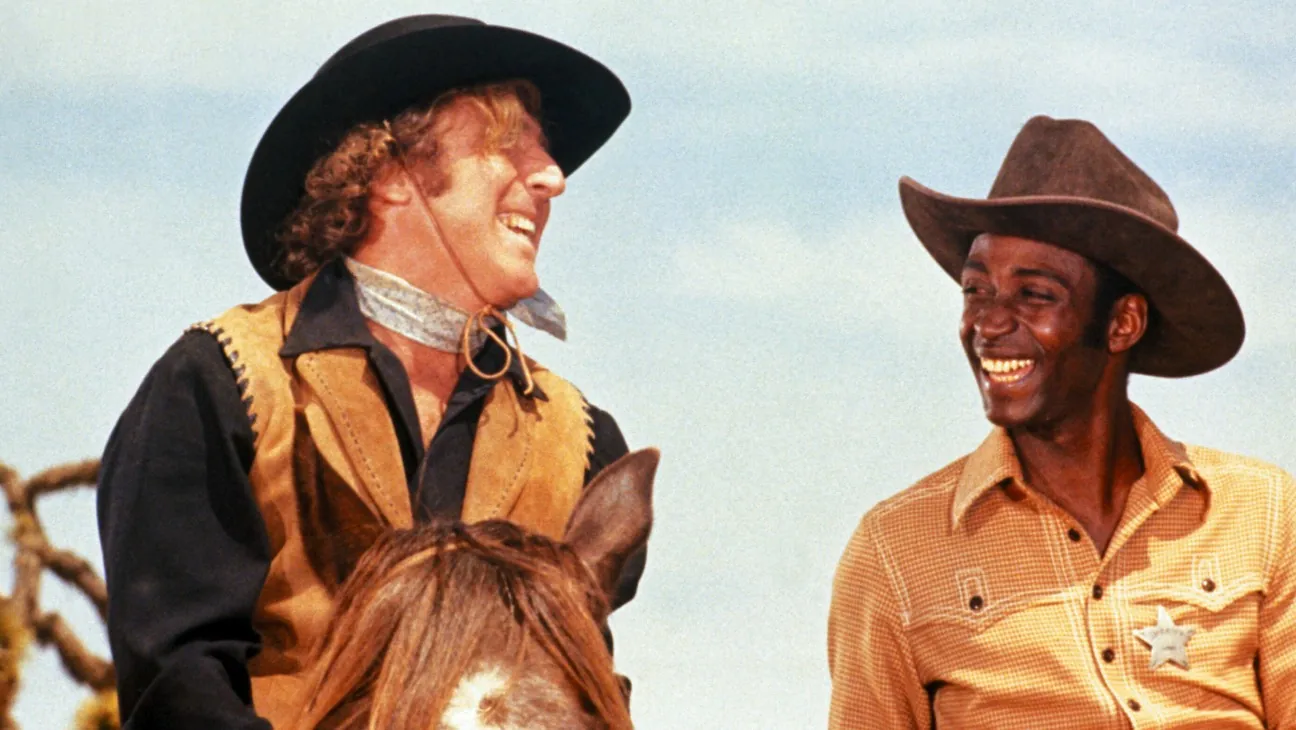
Few films make the Fire Tiger comparison as tempting as Blazing Saddles. The 1974 Western parody assaults the genre’s heroic self-image while pushing racial satire, profanity and comic anarchy into deliberately uncomfortable territory. It is prepared to risk offense and embarrassment to expose the conventions it is mocking.
The commercial numbers show how fully that nerve connected with an audience. Made for a reported $2.6 million, the film earned $119.5 million in the United States and became the country’s second-highest-grossing film of 1974.[1] Its later reputation can make the project seem inevitable, but success after release should not be confused with safety at the moment of creation.
Here Fire adds something distinct to the base Tiger profile. The film does not merely challenge its target; it stages the challenge at maximum volume. Brooks uses songs, broad physical comedy, verbal aggression, direct violations of cinematic reality and eventually the destruction of the film’s own boundaries. The showmanship is inseparable from the argument.
Reinvention without becoming respectable
Brooks’s career has moved among performance, television writing, recording, filmmaking, acting and musical theater. Traditional zodiac guides commonly list actor, comedian, writer and performer among occupations considered suitable for Tigers.[4] That correspondence is amusingly complete, although the more important evidence lies in what Brooks did while moving between those forms.
The stage musical adaptation of The Producers is the clearest example. Instead of treating his filmography as a sealed monument, Brooks recast an earlier screen comedy for Broadway. The musical won a record 12 Tony Awards, demonstrating that his sensibility could be re-engineered for a different medium and a new audience.[1]
Reinvention did not require sanding away the original provocation. The premise remained an outrageous backstage farce involving producers who plan to profit from a deliberately disastrous musical about Hitler. What changed was the machinery: cinematic satire became songs, choreography and live theatrical command. That is where the Fire Tiger symbolism fits best—not as an explanation for the achievement, but as a compact image of nerve joined to spectacle.
Nor does every career fact need to be made into zodiac confirmation. Longevity, awards and box-office results depend on craft, collaborators, opportunity, persistence and audience response. A symbolic system becomes less interesting when it claims all favorable outcomes as proof. Brooks offers a strong comparison because the same recognizable behaviors—parody, confrontation, performance and formal restlessness—recur across distinct phases of the work.
Lucky numbers, colors and compatibility
Traditional zodiac guides associate Tigers with the lucky numbers 1, 3 and 4, and with the colors blue, grey and orange.[3][4] These correspondences belong to folk practice rather than evidence-based forecasting.
- Strongest traditional matches: Horse, Dog and Pig
- More difficult traditional matches: Monkey and Snake
Compatibility in this context describes inherited zodiac tradition, not a reliable test of friendship, romance or working relationships.[3][4] Lists of supposedly unlucky Tiger numbers and colors also vary among sources, so there is little value in presenting one disputed set as authoritative.
Brooks among the Fire Tigers of 1926
The Fire Tiger year of 1926 also included Marilyn Monroe, Fidel Castro, Harper Lee, Queen Elizabeth II and Tony Bennett.[2][5][6] The group is a useful warning against determinism: sharing an animal and element plainly does not produce one personality, profession, ideology or manner of public life. At most, a reader can find selective echoes of traditional Tiger themes such as visibility, resolve, charisma or independence.
A Fire Tiger at 100
Brooks turned 100 on June 28, 2026, extending a public career that now spans nine decades.[1] The year has supplied fresh reminders that his comedy has not settled quietly into the archive. In January, the documentary Mel Brooks: The 99 Year Old Man! premiered, while the American Film Institute’s updated 100 Years…100 Laughs ranking placed Blazing Saddles at No. 1.[1]
Fire Tiger symbolism offers a strikingly coherent way to read Brooks’s audacious public style: the anger made comic, the blunt attack disguised as spectacle, the appetite for risk and the repeated refusal to remain inside one form. The match is vivid enough to enjoy without turning coincidence into proof. His birth year supplies the symbol; the nerve, craftsmanship and reinvention belong to the life he actually lived.
References
- Mel Brooks, Wikipedia
- Fire Tiger, Wikipedia
- Tiger (zodiac), Wikipedia
- Year of the Tiger: Fortune and Personality, China Highlights
- Year of the Tiger: Famous People Born Under the Chinese Zodiac Sign, Newsweek, 2022
- Celebrities Born in the Year of the Tiger, People