At 2:35 a.m. PDT on August 26, 2026, Falcon 9 lifted off from Space Launch Complex 4 East at Vandenberg Space Force Base. The Starlink 15-22 mission carried 27 satellites, and the launch occurred at 0935 UTC. Booster B1082, flying for the 24th time, subsequently landed on the droneship Of Course I Still Love You, completing the 655th Falcon booster landing. These are completed-flight facts as of August 26, not a schedule awaiting fulfillment.[1]
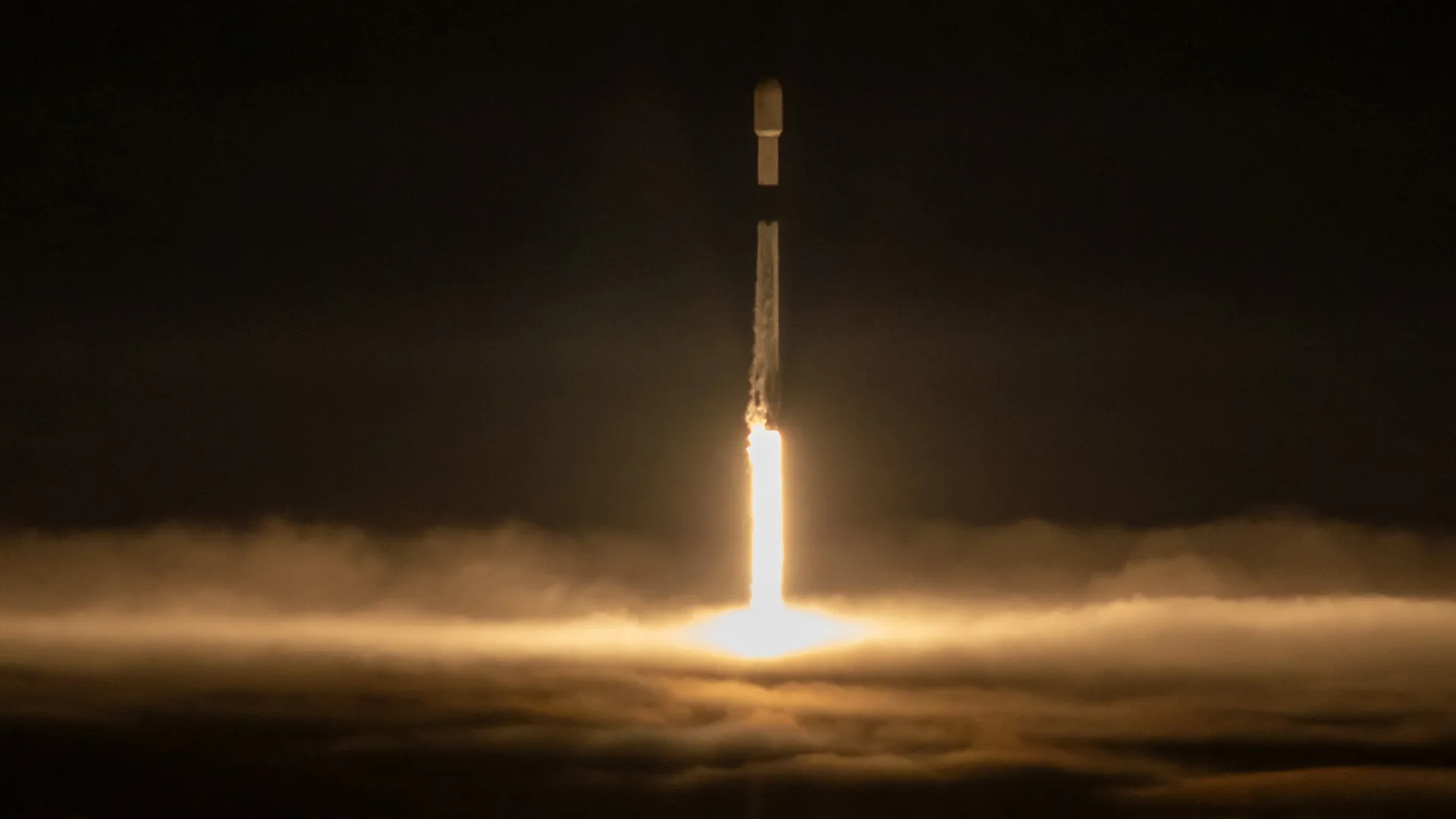
Only after fixing that operational record does it make sense to ask how the same moment appears in the Chinese almanac. Converted to the traditional calendar, August 26 was the 14th day of the seventh lunar month in the bingwu, or Fire Horse, year: 丙午年七月十四. Its day pillar was 壬申, commonly rendered a Water Monkey day, and its 12 Day Officer was 建, Establish.[2][3][4]
That conversion does not yield a single favorable or unfavorable score. It opens several overlapping readings: the character of the day, activities marked suitable or unsuitable, the double-hour of liftoff, named stars, zodiac relationships and the wider lunar-month setting. For this SpaceX Falcon 9 launch date in the Chinese almanac, those layers do not all point in the same direction.
The August 26 reading at a glance
| Layer | August 26, 2026 reading | Relevance to the launch |
|---|---|---|
| Calendar date | 丙午年七月十四; 壬申 day | Establishes the lunar date and ganzhi day pillar |
| Day Officer | 建日, Establish Day | Broadly associated with establishing or initiating, but not a complete verdict |
| Suitable activities | Includes 出行, travel | Offers a favorable symbolic analogy, not a technical category for spaceflight |
| Launch hour | 2:35 a.m. PDT falls within 辛丑时 | Rated auspicious in the selected Skillon entry |
| Restrictive signals | 天牢, 月建 and a clash with Tiger | Complicate an otherwise favorable reading |
| Seasonal setting | Ghost Month, one day before the Ghost Festival | Adds cultural sensitivity without determining a physical outcome |
Why an Establish Day is only the first layer
The day officer is part of a repeating sequence of 12 designations used to characterize days. Establish, Remove, Full, Balance, Stable, Initiate, Destruction, Danger, Success, Receive, Open and Close each provide a broad date-selection tendency. This sequence operates alongside the 60-combination ganzhi cycle rather than replacing it.[5]
A 建日 can naturally attract attention when the event is a departure: ignition, ascent and deployment certainly look like initiation. Yet the label remains broad. An Establish Day does not mean that everything started on it is automatically favored, and it says nothing about propellant loading, upper-level winds or whether a booster is ready for another flight.
The almanac therefore narrows the reading with yi and ji—宜 and 忌—lists of activities considered suitable or better avoided. These lists are computed from calendrical relationships and traditional rules; they are not improvised descriptions of whatever modern event happens to occur that day.[6][7]
Travel appears on the suitable list
For August 26, 出行—going out or travel—appears among the suitable activities. The same yi column includes relocation, entering a residence and marriage. The ji column lists activities including groundbreaking, placing a bed and planting.[2]
Of those entries, travel is the most tempting point of contact with a launch. Falcon 9 did, after all, leave the pad and carry a payload toward orbit. But that is an analogy made by a modern reader. 出行 historically addresses human departure and travel; the Tong Shu does not contain a dedicated category for orbital launch vehicles.
The prohibited activities should be handled with equal restraint. A rocket stands on ground infrastructure, but that does not turn every mission into almanac-style groundbreaking. Nor does payload deployment become planting merely because satellites are placed into a constellation. Stretching each traditional term until it matches aerospace vocabulary would make the reading impossible to test or trace.
The launch hour supplies the clearest favorable signal
Chinese hour readings divide the day into 12 double-hours. Using Vandenberg local time, 2:35 a.m. PDT falls within 丑时, the period from 1 a.m. to 3 a.m. In Skillon’s entry for August 26, this is the 辛丑 double-hour and is rated 吉, auspicious.[3]
The location convention matters. This reading uses the clock at the launch pad, not Beijing time or UTC. Applying another location to the same instant can place it in a different double-hour and therefore change the hour layer.
Edition choice matters too. Almanacs can disagree over individual hour ratings: Calendar2U and Skillon, for example, do not give the same assessment to every double-hour on August 26, including 子时.[2][3] The claim here is deliberately narrow: the actual 2:35 a.m. pad time is auspicious in Skillon’s selected Tong Shu entry. It is not presented as a universal ruling shared by every edition.
Tian Lao and the signals that resist a clean verdict
The favorable travel entry and auspicious launch hour sit beside 天牢, Tian Lao, categorized as a black-path influence in the day’s almanac entry. The date also carries 月建 among its unfavorable shensha, or calendrical stars. In zodiac relationships, the Monkey day clashes with Tiger, while Rat and Dragon are listed as favorable signs.[2][7]
These labels answer different traditional questions. The Day Officer gives a general character to the date. The yi/ji list addresses particular activities. The hour rating distinguishes one portion of the day from another. Shensha add relationships derived from stems, branches and calendrical position. A zodiac clash is relevant to people or directions associated with the affected sign; it is not a claim that a titanium or aluminum vehicle possesses a zodiac identity.
The 28 lunar mansions can form another layer in a fuller Tong Shu consultation, but no case-specific mansion interpretation in the available material is strong enough to carry weight here. Mentioning the system is useful; inventing a rocket-specific meaning for it would not be.
A launch during Ghost Month
August 26 also fell within the seventh lunar month, commonly called Ghost Month. In 2026, that period ran from August 13 through September 10, and the Ghost Festival fell on August 27—the day after the Starlink launch.[8]
This setting contributes cultural caution rather than a blanket ban. Ghost Month observances and taboos vary by community, household and almanac practice. Its proximity can make date selection feel more sensitive, but it does not erase the suitable-travel listing or the favorable 丑 hour. Nor does either favorable indication cancel Tian Lao. The layers accumulate; they are not votes that must produce a majority.
What the neighboring launch date reveals
A nearby mission makes the importance of conversion visible. On August 25, SpaceX launched Starlink 10-49 using B1067 on that booster’s record-setting 37th flight.[9] The supported calendar conversion used here places August 25 on 七月十三, a 辛未 day with the Close officer, 閉, rather than the Establish officer assigned to August 26.[2][4]
One day therefore changes the ganzhi pillar and Day Officer even though the two missions belong to the same launch program and departed within roughly the same coastal operating environment. A conflicting published lunar-date listing for August 25 is also a reason to keep this comparison narrow rather than build a second elaborate reading on it. Date conversion should be cross-checked before interpretation begins.
The almanac did not clear Falcon 9 for flight
Operationally, the mission entered its launch opportunity with a forecast calling for a 90 percent chance of favorable weather.[1] Weather was only one part of the real decision environment. Vehicle status, booster readiness, pad systems and range clearance determine whether a launch team can proceed. A favorable double-hour cannot resolve a technical hold, and Tian Lao cannot create one.
Nothing in the available launch reporting indicates that SpaceX scheduled Starlink 15-22 by consulting a Tong Shu. Reading the date afterward can explain how traditional date selection organizes time, activities and relationships, but it cannot be used as evidence that the almanac predicted the successful ascent or droneship landing.
The completed flight leaves the mixed reading intact: an Establish Day, travel among the suitable activities and an auspicious 辛丑 launch hour, alongside Tian Lao, 月建, a Tiger clash and the eve of the Ghost Festival. The hour calculation depends specifically on Vandenberg local time, while another location or almanac edition may alter details. That unresolved combination is the useful result—a traceable cultural reading of the launch date, not a forecast of whether Falcon 9 would reach orbit.
References
- SpaceX launches 27 Starlink satellites on Falcon 9 rocket from Vandenberg — Spaceflight Now
- Almanac Calendar – Chinese Zodiac, Bazi, Auspicious Days — Calendar2U
- Daily Chinese Almanac Tong Shu Calendar: Auspicious Dates — Skillon
- Chinese Calendar 2026 – Year of the Horse — Prokerala
- Navigating the 12 Day Officers in the Chinese Almanac Tong Shu — Wonyan Consult
- Yi & Ji (宜/忌): Almanac Suitable & Avoid Days — IchingCheck
- Chinese Almanac (Tong Shu): Secret Behind Lucky Days — FengShuiBalanz
- Hungry Ghost Festival 2026: Dates, Meaning, Rituals, Taboos — WOFS.com
- Live coverage: SpaceX to launch Starlink mission on a Falcon booster’s record-breaking 37th flight — Spaceflight Now