The familiar image of a gentle Rabbit sits awkwardly beside Nick Saban. His coaching reputation was built on exacting standards, detailed preparation and a demanding style—not on softness or avoidance of uncomfortable corrections.[1] Yet his Chinese zodiac sign is unmistakably the Rabbit.
Saban was born on October 31, 1951, placing him well inside the Metal Rabbit year, which ran from February 6, 1951, to January 26, 1952.[2][3] His birthday also falls safely after the beginning of spring used by systems that change the astrological year at lichun rather than Chinese New Year, so the two common conventions produce the same year-sign result.[3][4] Under either convention, the relevant designation is Xin Mao (辛卯), the Metal Rabbit.

Why “Rabbit” alone is too blunt
Xin Mao is the 28th pairing in the traditional 60-part sexagenary cycle. Xin (辛) is the yin-Metal heavenly stem, while Mao (卯) is the earthly branch associated with the Rabbit.[3] The animal supplies only one layer of the designation. Leaving out the stem is rather like describing a defense by its formation while ignoring how its players are instructed to execute it.
Popular traditional profiles describe Rabbits as gentle, quiet, alert, patient and responsible, with a preference for avoiding conflict.[5][6] Some of that fits Saban more readily than it first appears: alertness, patience and responsibility are all compatible with a coach who notices small errors and prepares for contingencies. The difficulty lies in treating “gentle” and “conflict-averse” as the whole portrait.
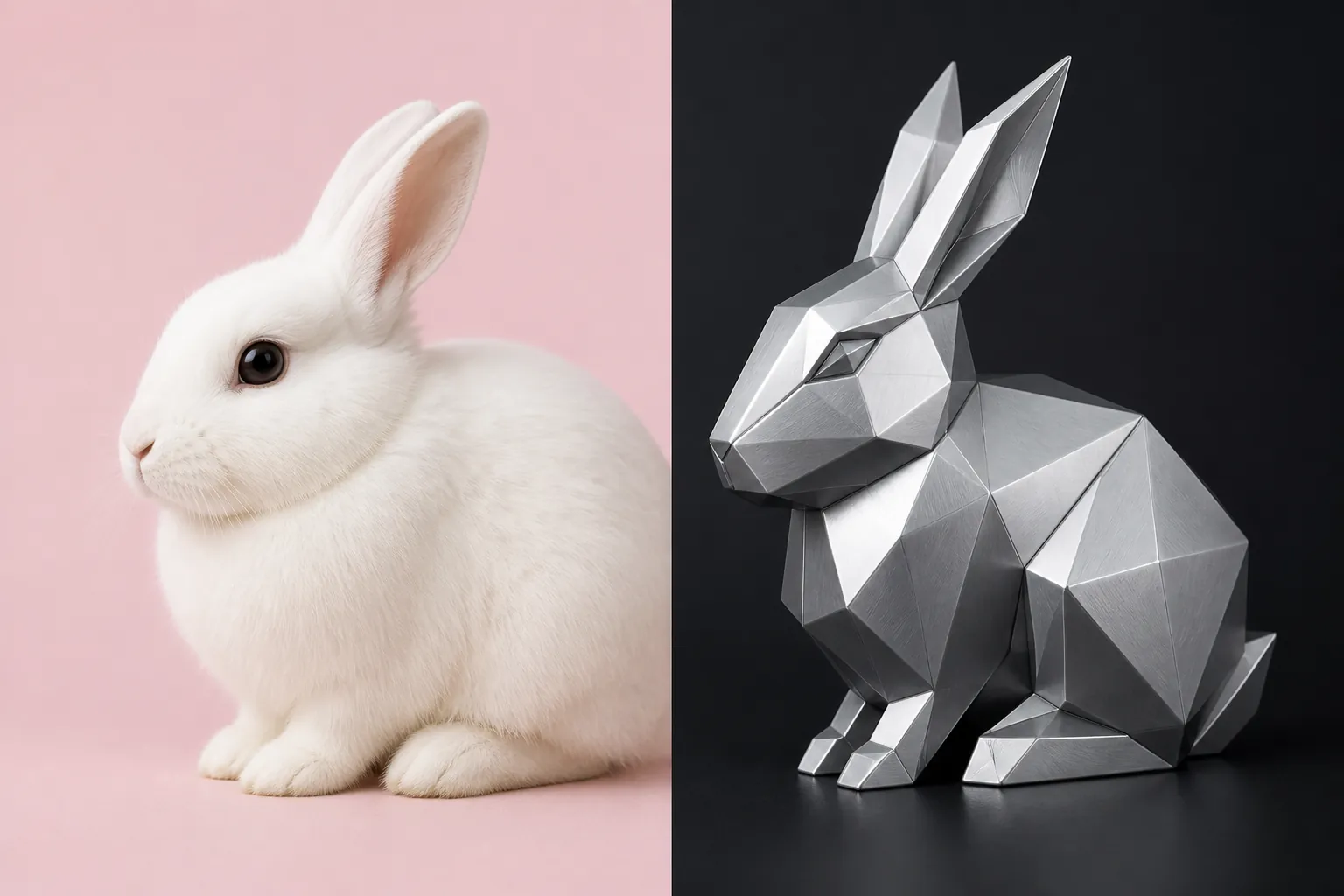
The Metal subtype adds a more useful edge. Traditional summaries associate the Metal Rabbit with conservatism, quiet work without an expectation of immediate reward and a dislike of fierce competition.[6] Yin Metal is conventionally read through qualities such as refinement, precision and disciplined sharpness. This does not turn the Rabbit into a disguised warrior sign. It suggests a working style that is controlled, vigilant and exact rather than loud or impulsive.
These are cultural archetypes, not empirically established personality measurements. They cannot demonstrate why Saban behaved as he did or why his teams won. Their value here is narrower: Xin Mao gives a more precise analogy for his documented methods than the flattened stereotype of a harmless, accommodating Rabbit.
A career built before it became a dynasty
The strongest point of contact is not a championship count. It is the length of the apprenticeship. Saban spent roughly 16 years in assistant roles beginning in 1973 before receiving his first college head-coaching job at Toledo in 1990, when he was 38. He did not win his first national championship until the 2003 season at LSU, at age 52, and he continued coaching through age 72.[2]
Reading that progression as a “Rabbit pattern” is an interpretation, not a conclusion supplied by the historical record. Still, the shape of the career resonates with the traditional emphasis on patience and quiet accumulation. For years, the visible reward remained smaller than the preparation behind it. Position coaching, coordinating, recruiting, correcting technique and rebuilding systems came before the period that turned Saban into a symbol of college football dominance.
His process-first philosophy makes the comparison more specific. Rather than making the emotional drama of winning and losing the daily unit of work, that approach directs attention toward repeatable execution: the next assignment, the next practice detail and the standard applied to an ordinary repetition. Accounts of his career emphasize both his demanding manner and his ability in defense and recruiting.[1] In zodiac terms, the relevant qualities are not sweetness or passivity but vigilance, structure and the willingness to correct the same kind of flaw repeatedly.

The eventual numbers show what that accumulation produced. Saban finished his college head-coaching career with a 292–71–1 record and seven claimed national championships. From 2007 through 2023, Alabama went 201–29 under him; his career SEC record was 161–33, a winning percentage of .829. Alabama also recorded 16 consecutive 10-win seasons.[2]
Those figures matter less as trophies to be matched with zodiac adjectives than as evidence of sustained replication. A single championship can emerge from one exceptional roster and one favorable season. Maintaining double-digit wins across changing players, assistants and opponents requires standards that can survive turnover. This is where Metal Rabbit works best as a career lens: patient repetition from the Rabbit side, sharpened by the precision and structural discipline associated with yin Metal.
Quiet effort should not be confused with a quiet workplace. Saban could be visibly forceful because the system depended on immediate correction. Nor does patience mean accepting slow improvement indefinitely. In this reading, patience belongs to the long horizon—the years needed to build expertise and institutional consistency—while Metal supplies severity at the level of daily execution.
The parts that do not fit cleanly
The Metal Rabbit description still contains a serious obstacle: it is traditionally said to dislike fierce competition.[6] Saban chose one of the most competitive professions in American sports and succeeded at its highest collegiate level. Rebranding that trait as secret competitiveness would simply retrofit the archetype to the result.
A more limited distinction is possible. Public competition and internal working method are not identical. Saban’s teams played in zero-sum contests, but his process philosophy attempted to prevent the opponent, the scoreboard and emotional combat from governing each preparation decision. The method redirected competitive pressure into execution under a controllable standard. That creates a genuine point of resonance with the composed Metal Rabbit profile, although it does not eliminate the underlying contradiction.
The harmony associated with Rabbit profiles also fares poorly in parts of his résumé. His two seasons as head coach of the Miami Dolphins included personality clashes, showing that disciplined control did not automatically translate across every professional environment.[1] The problem cannot be tidied away by claiming that an incompatible setting overwhelmed his “natural” sign. Different authority structures, personnel systems, relationships and football conditions are more concrete explanations.
His earlier Cleveland Browns experience is another useful warning against a polished destiny narrative. Saban later called that period “the worst of my life.”[2] Apprenticeship can look noble once the apprentice becomes famous; while it is happening, repetitive work inside a difficult institution may simply feel punishing. The Metal Rabbit analogy captures endurance more convincingly if it leaves that discomfort intact.
Alabama’s first season under Saban also invites overinterpretation. The 2007 team lost six games by seven points or fewer.[2] A zodiac reading might be tempted to label those narrow defeats a shadow of caution, conservatism or conflict avoidance. The results alone do not establish any such cause. Close losses can arise from execution, personnel, strategy and chance; they do not diagnose an archetypal weakness.
What the year pillar can reasonably tell us
This analysis is limited to Saban’s 1951 year designation. A full BaZi reading would require his birth hour as well as the complete set of pillars, and no public birth hour is available in the materials used here. It would therefore be misleading to infer luck cycles, favorable career periods or future events from the Metal Rabbit label.
Saban’s record was created by decisions, players, assistants, institutions, resources and decades of work. His birth sign did not produce seven championships, and the championships do not prove the sign. What Xin Mao offers is a culturally coherent way to notice the method underneath the mythology: precision joined to vigilance, patience joined to discipline, and achievement accumulated through standards repeated long before the rewards became immediate.
That narrower verdict also resolves the opening mismatch without pretending every detail fits. Nick Saban remains an uncomfortable example of the soft Rabbit stereotype. He is a much more convincing example of why the yin-Metal component should not be omitted.
References
- Nick Saban | Biography, Championships, & Facts | Britannica — Britannica
- Nick Saban - Wikipedia — Wikipedia
- Metal Rabbit - Wikipedia — Wikipedia
- Chinese zodiac - Wikipedia — Wikipedia
- Year of the Rabbit: Horoscope Predictions for 2026 - China Highlights — China Highlights
- Year of the Rabbit: 2026 Chinese Zodiac Rabbit Horoscope - Travel China Guide — Travel China Guide