A BaZi calculator usually gives you more than a horoscope-style paragraph. It produces a grid of four columns, Chinese characters, element labels, Ten God relationships, and sometimes percentages or automatically generated interpretations. The useful response is not to read every label at once. Start by identifying what each part of the grid represents, then read the chart in order: Day Master, month command, roots, Ten Gods, and luck cycles.
BaZi, or the Four Pillars of Destiny, means “eight characters”: four pillars, with each pillar containing one Heavenly Stem and one Earthly Branch. The four pillars correspond to the year, month, day, and hour of birth.[1][2] The calculator is therefore arranging birth-time information into a particular structure; it is not generating a random collection of symbols.
What the Calculator Is Showing
The four columns normally run from Year Pillar to Month Pillar, Day Pillar, and Hour Pillar. The upper character in each column is the Heavenly Stem, while the lower character is the Earthly Branch. Together, the eight characters form the natal chart. The branches can also contain hidden stems, which is one reason a chart may include information that is not obvious from simply looking at the visible characters.
The month is especially important because the Month Pillar is determined by solar terms rather than by treating the lunar calendar month as an ordinary calendar label.[1][2] The hour is divided into twelve two-hour periods.[1] This is why a serious calculator asks for an exact birth time and location: changing the time zone, daylight-saving treatment, or boundary around a solar term can change part of the chart. A birth time entered approximately may produce a chart that looks complete while placing the Hour Pillar incorrectly.
Before interpreting any AI-generated paragraph beside the chart, check the underlying inputs and calculation method. Confirm the date, clock time, location, time-zone handling, and whether the calculator uses solar-term boundaries. The prose may sound confident even when the chart has been calculated from the wrong time.
1. Find the Day Master
The first practical task is to find the Heavenly Stem in the Day Pillar. That stem is the Day Master, also called the Day Master element or self element. It is the reference point for interpreting the rest of the chart.[1][3][4]
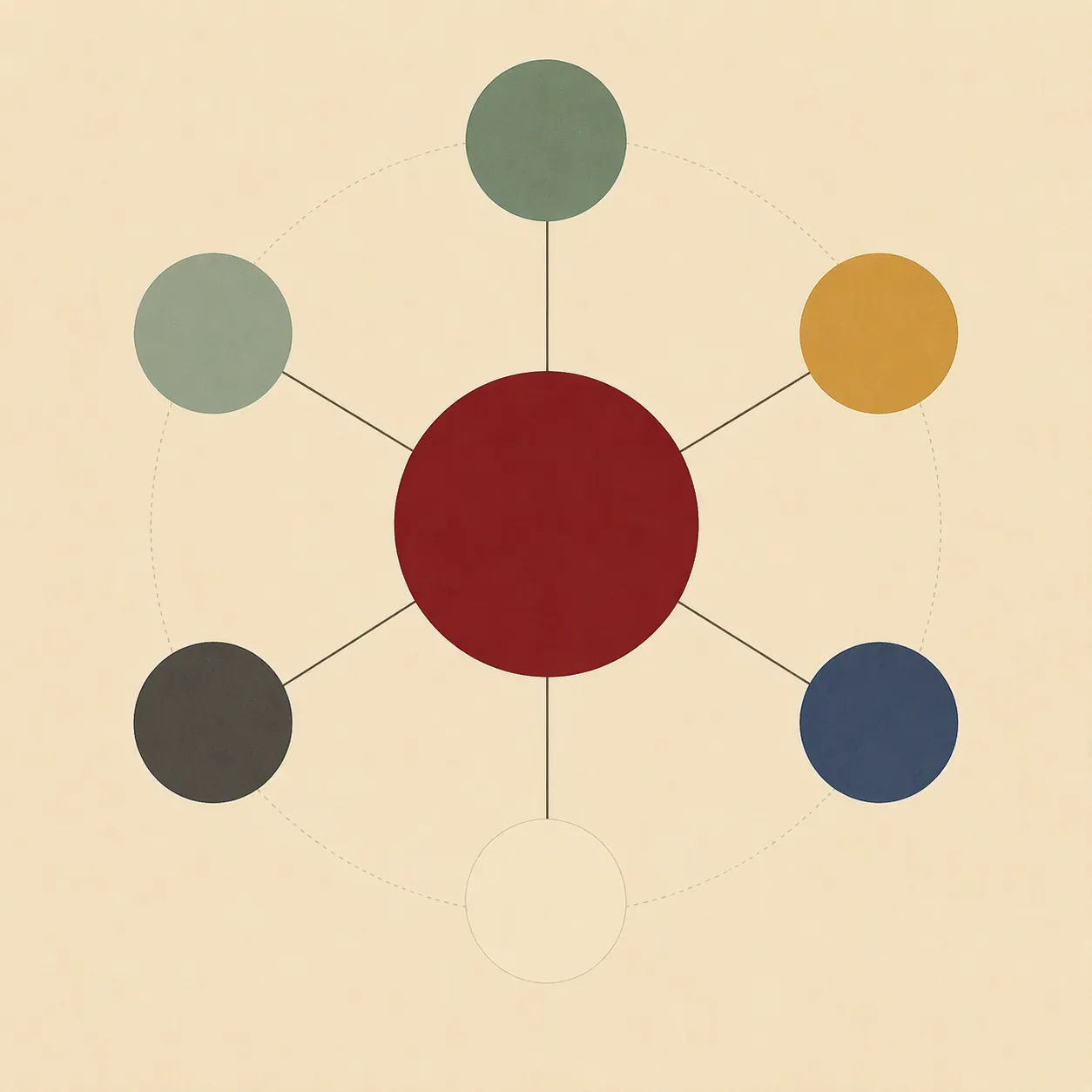
If the Day Master is Wood, for example, the other elements are not read as isolated personality symbols. Their meaning depends on their relationship to Wood. Fire is what Wood produces, Earth is what Wood controls, Metal controls Wood, and Water produces or supports Wood. The same element therefore has a different interpretive role when the Day Master changes.
This is the point at which many calculator readings go off course. An element percentage is not a verdict about who you are. It does not replace identifying the Day Master, and it does not by itself establish whether the Day Master is strong or weak. Percentages can be a rough visual summary of what the software counted, but interpretation depends on position, season, roots, combinations, and the quality of support or pressure.
2. Read the Month Command
After locating the Day Master, examine the Month Pillar, especially the Earthly Branch known as the month command. It establishes the seasonal climate in which the Day Master appears. The same Day Master does not operate under identical conditions in every month: seasonal heat, cold, dryness, or moisture changes how available and usable an element is.
Month command is therefore not just another item to count. It is the first major clue in judging strength. A Day Master that appears frequently in the visible chart may still be poorly supported by its season, while one that appears less often may receive meaningful seasonal assistance. The count can describe quantity; the month command helps describe condition.
3. Check the Roots
Next, look for roots in the Earthly Branches. A root is a connection that gives the Day Master a more substantial base in the chart, including support found through the branch structure and hidden stems. This is why reading only the four visible Heavenly Stems can be misleading: the branches carry part of the chart's underlying support.
Then compare support with pressure. Support may come from the same element as the Day Master and from the element that produces it. Pressure can come from elements that control it, drain it through production, or otherwise place demands on it. Practitioner reading methods commonly assess month command first, then roots, then the balance of support and pressure rather than declaring strength from a simple element total.[3][5]
For a beginner, the responsible conclusion is often provisional: the Day Master appears relatively supported, relatively pressured, or mixed under the chart's seasonal conditions. Forcing a perfectly strong-or-weak label when the evidence is mixed creates false precision. A full judgment may require examining combinations, clashes, hidden stems, and the interaction among the pillars.
Why Counting Elements Is Not Enough
Suppose a hypothetical chart shows several Wood indicators but places a Wood Day Master in an unfavorable seasonal environment, with little rooted support and substantial controlling pressure. A calculator that reports “Wood is the largest percentage” has not answered the more important question: how does that Wood function in this chart? The example is deliberately incomplete because strength is a judgment about relationships and conditions, not a result that can be calculated from a single tally.
4. Translate the Ten Gods
Ten Gods labels describe the relationship between another stem or element and the Day Master. They are not ten independent deities, and they are not fixed predictions about ten areas of life. The labels divide the five elemental relationships into paired categories:
| Relationship category | Basic relationship to the Day Master |
|---|---|
| Resource | Produces or supports the Day Master |
| Peer | Shares the same elemental nature as the Day Master |
| Output | Is produced by the Day Master |
| Wealth | Is controlled by the Day Master |
| Officer | Controls the Day Master |
Each category has two Ten Gods because the yin-yang relationship also matters. The first useful step is not memorizing every traditional association. It is to ask what the label is doing structurally. A Resource indicator may point to support, learning, or input in a particular reading; an Output indicator concerns what the Day Master expresses or produces; Wealth and Officer describe control relationships; Peer indicates similarity or competition. The chart position and the overall strength judgment determine how much weight any one label deserves.[4][6]
This also explains why the same Ten God should not be converted directly into a guaranteed career, marriage, or wealth outcome. A prominent label can be useful, excessive, constrained, or activated differently depending on the rest of the natal structure. Read it as a relationship first and a life-domain association second.
5. Add the Luck Cycles Last
Major Luck Pillars, or Da Yun, add a time dimension to the natal chart. They are commonly presented as ten-year cycles overlaid on the original structure, while annual luck provides a shorter yearly trigger.[1][4] These cycles do not replace the natal chart. They interact with it.
Read the natal structure first. Once you know the Day Master, seasonal condition, roots, and major relationships, you can ask what a particular Luck Pillar introduces: more support, more output, a controlling element, a repeated relationship, or a new combination with the natal branches. Without that baseline, the luck-cycle table is just another row of characters and the interpretation becomes a sequence of detached claims.
The starting age and direction of Luck Pillars can depend on the calculation convention and birth details, so calculator outputs should be checked rather than assumed to be interchangeable. Even when the cycle is calculated consistently, it indicates a changing set of conditions, not a guaranteed event. A favorable-looking period still requires choices, circumstances, and actual action to produce an outcome.
What You Can Responsibly Conclude
After following the sequence, a beginner can reasonably describe the chart's main reference point, seasonal setting, available support, major relationship categories, and the kinds of conditions emphasized by a current or future Luck Pillar. That is already substantially more useful than copying a paragraph from a calculator.
A chart should be treated as a cultural-diagnostic framework for discussing tendencies and structure, not as a scientifically established mechanism for fixing future events. Practitioner explanations can help with difficult judgments such as borderline Day Master strength, branch interactions, or timing conventions, but no calculator can settle the meaning of a person's life from birth data alone. Even within BaZi's own interpretive logic, structural conditions are not the same thing as results; what someone does with those conditions remains part of the outcome.[7]
The simplest quality check is therefore also the most important one: if a reading jumps from a single character or percentage to a definite prediction, it has skipped the structure that gives the chart meaning. Return to the Day Master, month command, roots, Ten Gods, and only then the Luck Pillars. The calculator can organize the map. It cannot make the judgment for you.
References
- Four Pillars of Destiny — Wikipedia
- Four Pillars of Destiny (Bazi) — Travel China Guide
- How to Read a BaZi Chart — Master Sean Chan
- Beginner's Guide to Bazi — Imperial Harvest
- How to Tell If Your BaZi Day Master Is Strong or Weak — FateMaster
- The Ten Gods in BaZi — Master Sean Chan
- The Ten Gods (十神) in Chinese Metaphysics — Imperial Harvest