If the projected launch dates hold, the strongest light-touch almanac choice is to place the iPhone 18 Pro pre-order on Saturday, September 12, rather than treating the expected September 18 release as the lucky date. September 12 appears in the reference almanac’s favorable lists for both trading or vehicle purchases and contract signing. September 18 does not carry a comparable purchase, trading, or contract signal.
There is an important condition: Apple has not announced the event, pre-order window, or retail release. As of August 27, 2026, the dates below remain press projections, albeit projections consistent with the September launch pattern described by multiple Apple-focused publications.[1][2][3]
| Projected date | Launch-stage expectation | What it means for the buyer |
|---|---|---|
| Wednesday, September 9 | Expected announcement | Wait for Apple to confirm prices, models, markets, and ordering times. |
| Friday, September 11 or Saturday, September 12 | Expected pre-order window | September 12 is the preferred almanac-aligned action date if ordering is available. |
| Friday, September 18 | Expected in-store release and first deliveries | No trading or contract signal in the cited almanac reference. |
| Friday, September 25 | Mid-Autumn Festival | A practical date to notice when arranging a later collection or delivery. |
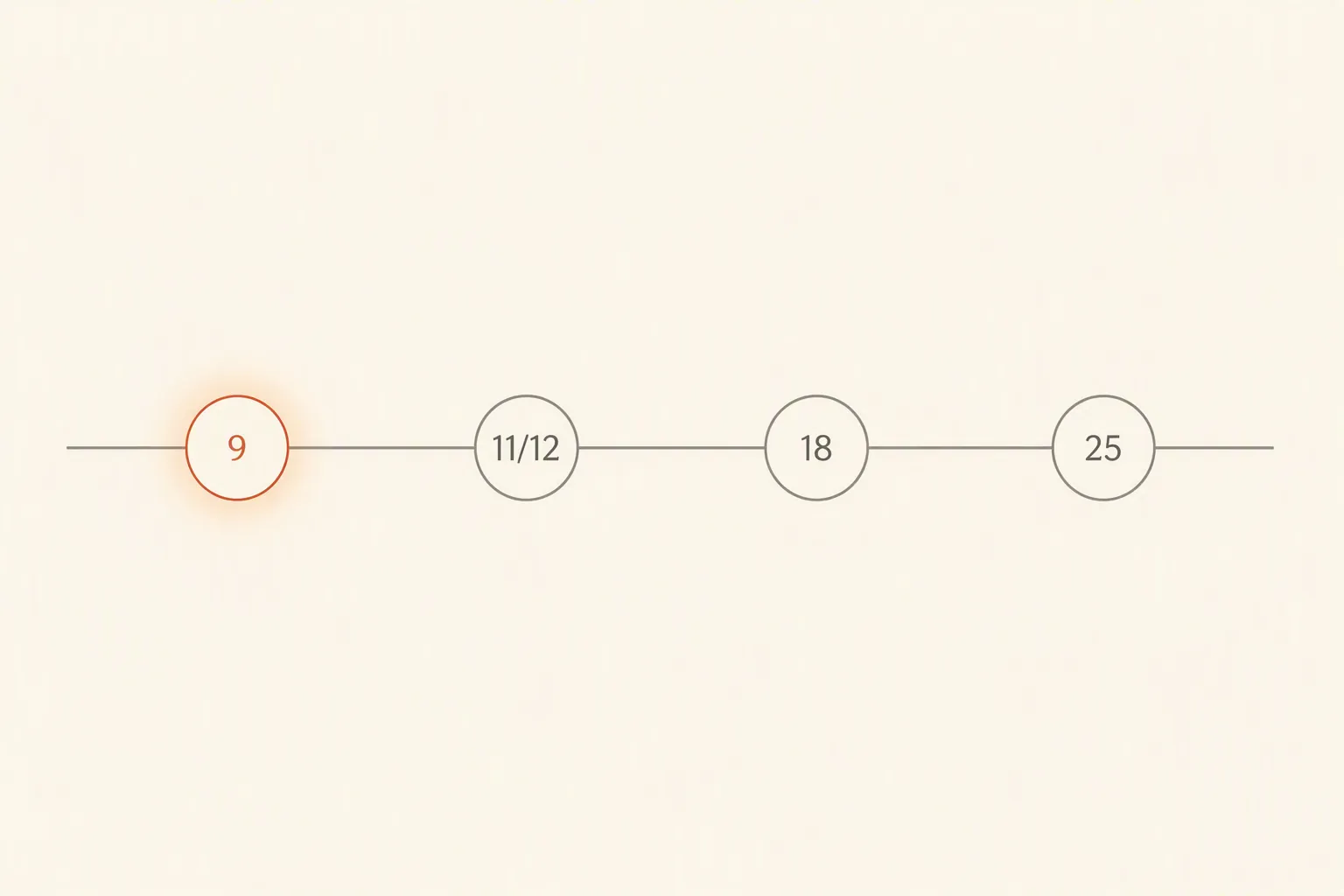
9to5Mac expects a September 9 event, followed by pre-orders on September 11 or 12 and release on September 18. Its suggestion that Apple could move pre-orders from Friday to Saturday to avoid the 9/11 association is the publication’s speculation, not an explanation supplied by Apple.[1] Until the company publishes its schedule, September 12 is a conditional opportunity rather than an appointment.
Why September 12 stands out
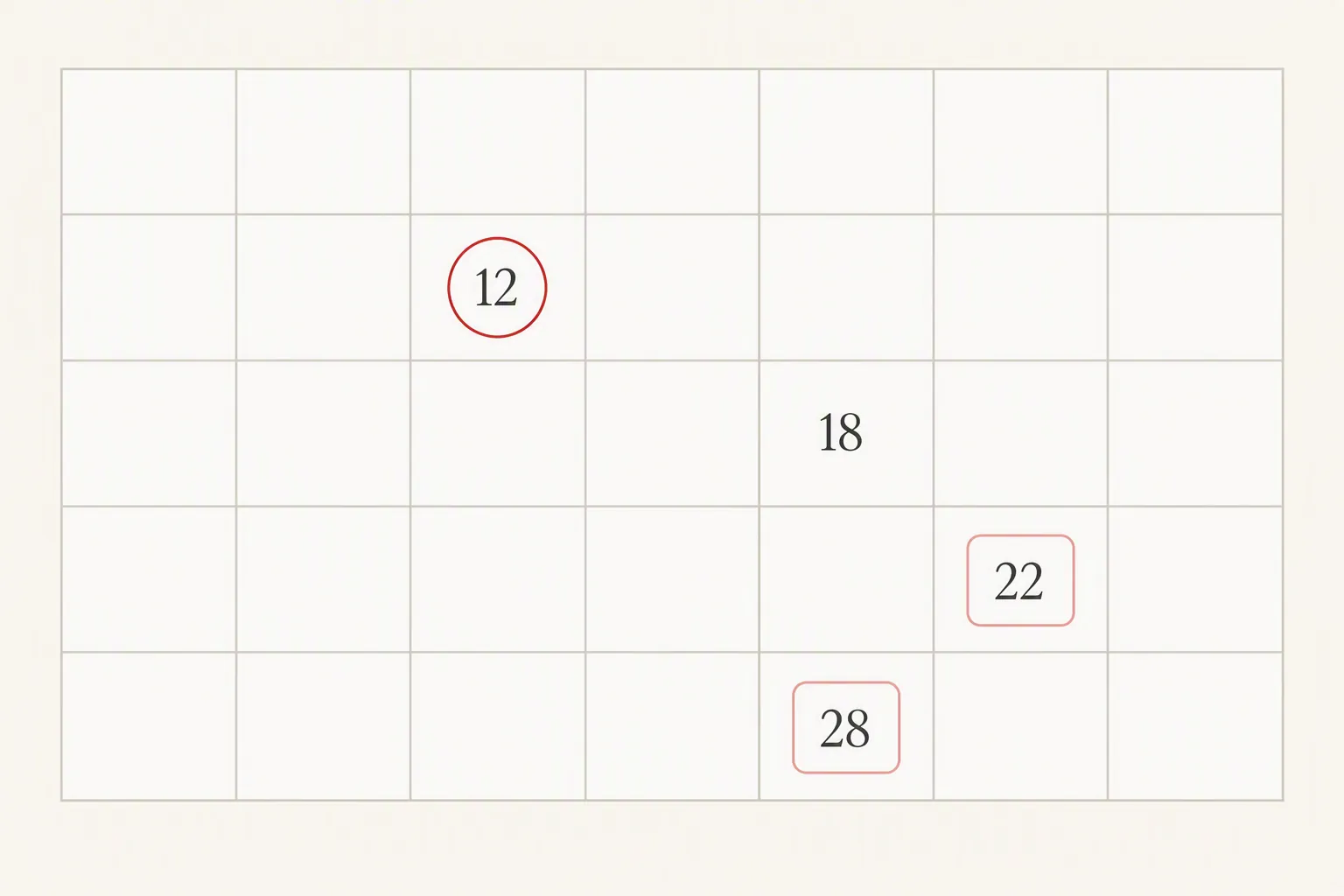
YourChineseAstrology’s September 2026 table lists September 3, 10, 12, 16, 22, and 28 as favorable for business trading and vehicle purchase. Its contract-signing list contains September 2, 3, 4, 10, 12, 16, 22, and 28. September 12 therefore sits in both of the categories most readily adapted to a high-value phone order.[4]
| Date | Trading or vehicle purchase | Signing contracts | Fit with projected launch |
|---|---|---|---|
| September 10 | Listed | Listed | Before the expected pre-order and release |
| September 12 | Listed | Listed | Potential pre-order date |
| September 16 | Listed | Listed | After projected pre-orders begin, but before retail release |
| September 18 | Not listed | Not listed | Expected release date |
| September 22 | Listed | Listed | Usable post-release pickup or purchase date |
| September 28 | Listed | Listed | Usable later pickup or purchase date |
This mapping is deliberately practical. A smartphone does not appear as a classical date-selection category. Treating an iPhone order as trading, receiving a valuable purchase, signing an agreement, or—more loosely—as analogous to buying a vehicle is a modern interpretation. The overlap makes September 12 a neat candidate; it does not turn the date into a traditional rule specifically governing electronics.
The expected September 18 release looks much less interesting under the same reference. That date appears under “Sacrifice,” but not in the listed categories for trading, vehicle purchase, or contract signing.[4] It would be misleading to borrow an unrelated favorable activity and use it to label the release broadly auspicious.
Nor does September 12 promise anything about the phone’s quality, the buyer’s experience, delivery speed, or future fortune. Its usefulness is narrower: when two workable ordering dates are otherwise similar, it supplies a culturally familiar reason to prefer one.
A favorable date still has to be a usable shopping date
An almanac list produces candidates; Apple’s ordering system determines whether those candidates can be used. That distinction removes September 10 and 16 from the list of realistic pickup alternatives under the projected schedule. Both receive relevant almanac markings, but both fall before the expected September 18 retail release. A favorable collection date is not useful when stores do not yet have the product available for collection.
- September 12: place the pre-order if Apple confirms that ordering is open and the desired configuration remains available.
- September 18: accept delivery or collect the phone if launch-day convenience matters more than date selection.
- September 22: the first clearly actionable post-release alternative in both relevant almanac lists.
- September 28: a later favorable alternative if stock, work, travel, or collection arrangements make September 22 impractical.
Waiting for September 12 can carry an ordinary shopping trade-off if pre-orders open on September 11: the desired storage, color, delivery slot, or pickup location may become harder to obtain. Almanac preference should not be confused with inventory control. A buyer who cares most about receiving a particular model should be prepared to order when Apple opens sales; a buyer with flexibility can give September 12 more weight.
Mid-Autumn Festival falls on September 25 in the cited calendar.[4] It does not improve the launch-date reading by itself, but it belongs in the logistics plan. Buyers arranging delivery, travel, or family commitments around that week should verify local store and courier availability before choosing between September 22 and 28.
Which calendar—and which local date?
The favorable-day findings here come specifically from YourChineseAstrology’s September 2026 tables. They should not be presented as a unanimous traditional verdict. Daily 宜 and 忌 judgments can vary among mainland Chinese, Hong Kong, Taiwanese, publisher-specific, and school-specific calendars.
The Hong Kong Observatory publishes a separate 2026 Tung Shing calendar reference.[5] Its inclusion here identifies an institutional alternative; its daily tables were not parsed to verify the September 12 and September 18 judgments used in this comparison. Readers who normally follow a Hong Kong, Taiwanese, family, temple, or practitioner-selected almanac should check that source rather than silently combining its conventions with the YourChineseAstrology list.
Time zone is equally easy to overlook. The cited September table is organized around Chinese calendar dates, so a buyer outside China should verify when the relevant almanac day begins and ends in the calendar system they follow. An online order placed late on September 11 in North America, for example, may already correspond to September 12 in China, but that conversion does not automatically settle which date a family practice would use. Decide whether the operative moment is the buyer’s local transaction time, the store’s date, or the China-based calendar date, then apply that convention consistently.
A general daily table also cannot supply a personalized clash assessment. If personal zodiac or birth-data clashes are part of the buyer’s usual practice, September 12 should remain a candidate until checked against the preferred method. This article only compares general calendar categories with the projected retail schedule.
Readers who want to see how a specific modern event can be evaluated with more detailed day, hour, and calendar signals can use How the Chinese Almanac Reads the Falcon 9 Launch Date as a methodological companion. The iPhone decision does not require that degree of analysis unless the buyer already uses a more formal date-selection practice.
The working plan for September
Watch for Apple’s actual announcement first. If the company confirms a September 12 pre-order opportunity, that is the cleanest intersection between the projected iPhone 18 Pro schedule and the cited almanac’s purchase-related categories. If pre-orders open only on September 11, decide whether the date preference is worth any reduction in model or pickup availability caused by waiting.
If the purchase moves beyond launch day, September 22 and 28 are the useful fallback dates because they occur after the projected release and appear in both relevant lists. September 10 and 16 remain favorable calendar entries, but they are not credible pickup choices under a September 18 retail schedule.
Revise the plan as soon as Apple publishes the real schedule. The almanac belongs in the date-selection category: a culturally meaningful preference applied to moments the buyer can control, not a guarantee of stock, phone performance, or fortune.
References
- iPhone 18 Pro release date: Here’s when Apple’s new flagship is coming — 9to5Mac, August 21, 2026
- iPhone 18 Pro: Everything We Know — MacRumors
- iPhone 18: Rumors and Release Date — MacRumors
- Chinese Calendar September 2026: Lunar Dates, Auspicious Dates and Times — YourChineseAstrology
- Tung Shing 2026 — Hong Kong Observatory